Davis had been convicted of the 1989 murder of an off-duty police officer. After the conviction, evidence came to light showing police misconduct, which included witness manipulation. Davis was convicted solely on the basis of eyewitness identification and at the time of the execution, seven of the nine witnesses had recanted their stories.
The Georgia Parole Board denied clemency and the U.S. Supreme Court denied his appeal.
In the days leading up to Davis' execution, mainstream television media followed the story closely. A few days after the execution, there were no mentions of his name. Over the last few days, the name Troy Davis has failed to grace the airways. No 'above the fold' stories were written.
Why?
Are there no more 'Troy Davises' across the country? Unlikely.

Reginald Clemons, whose case has similarities to Davis', recently petitioned for clemency in Missouri. Prosecutors are seeking to dismiss charges against John Edward Smith, who has been in prison for 20 years in California after a 1993 murder conviction. In Smith's case, the only witness at trial later admitted to lying on the stand because police officers pressured him to identify Smith as the killer even though they already knew someone else had actually committed the crime.
Is it because the mainstream media doesn't even like to talk about race in general? Certainly, it must be even more difficult to address the sweeping racial inequity in the criminal justice system, particularly in the capital murder structure.
In 1983, researcher David Baldus and colleagues found that Black defendants were four times more likely to receive a death sentence than a white defendant who had been convicted of committing comparable murders. Baldus accounted for levels of aggravation and still, Blacks were 400 percent more likely to be sent to death row. In addition, Baldus found that defendants convicted of murdering whites were far more likely to receive a death sentence and very unlikely to receive the same death sentence if victims were Black. Since Baldus' initial study was released, researchers have found that these trends persist up to the present day and at the federal level. Is this because Black lives have less value in American society than white lives?
Is the media even able to acknowledge its own racial biases?
Let's face it: Blacks are more likely to be stopped by the police. More likely to be questioned. More likely to be searched. More likely to be arrested. More likely to be uneducated or undereducated. More likely to be poor. More likely to be unable to afford counsel. And still, in 2012, more likely to be given the death penalty.
Supreme Court Justice White said it best in one majority opinion: "The risk of racial prejudice infecting a capital sentencing proceeding is especially serious in light of the complete finality of the death sentence."
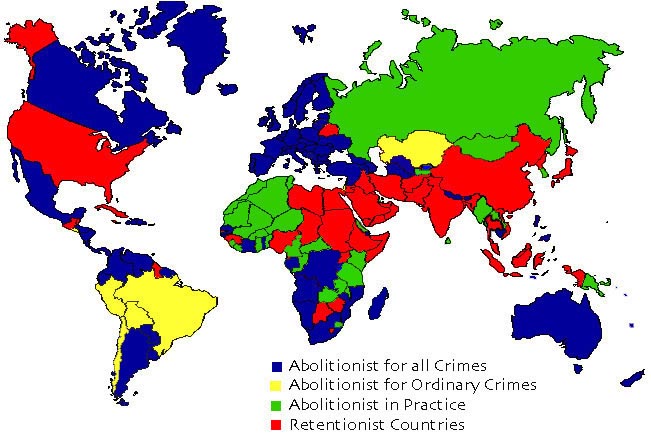
Although some strides have been made, as a few states have invalidated the death penalty altogether and the U.S. Supreme Court has invalidated the death penalty for minors, the United States is still behind among the rest of the world. Many of the countries it seeks to malign execute its citizens just like the U.S. Let us hope that we can learn something from Davis' execution about how our government and media should really operate in 2012. We must demand better.
More info here.